Flora

Dry deciduous forest and fire-adapted grassland communities form the backbone of Gomarda's ecosystem.

← Back to Home

The Forest Foundation

Gomarda's forests are dominated by Sal, alongside Bija, Tendu, Salai and Karra — a mix of dry deciduous species typical of the region. These trees shed their leaves in the dry season, opening up the canopy and making wildlife easier to spot.

Bamboo groves line stream beds and valley floors, while Teak stands are scattered through select forest compartments, valued both ecologically and historically for timber.

Beyond the tree cover, the sanctuary's grasslands support fire-adapted grasses and a variety of medicinal plants long used by local communities, forming a vital grazing habitat for the sanctuary's herbivores.
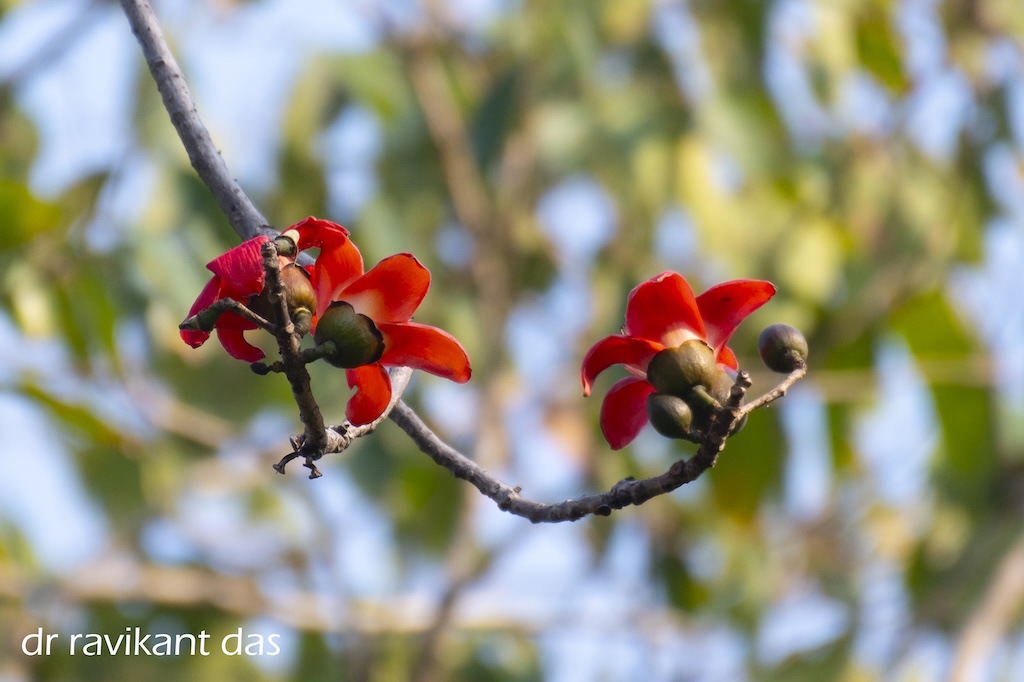
Semal tree in bloom

Species Checklist

Dominant Trees
Sal, Bija, Tendu
Other Trees
Salai, Karra, Teak
Understorey
Bamboo
Grassland
Medicinal plants & grasses
Best Time
Post-monsoon & winter
Plan Your Visit

A Landscape Shaped by the Seasons

MONSOON

Rain transforms the landscape into a sea of green. Streams become active, vegetation flourishes and the forest canopy grows dense.

WINTER

Cooler temperatures make the forest more comfortable to explore, and clear mornings are particularly rewarding for wildlife and birdwatching.

SUMMER

The forest becomes dry and open as Sal and other trees shed their leaves. Water becomes increasingly important to wildlife, making animal movement around water sources more noticeable.

Sal is the tree that defines Gomarda's character — its tall trunks and broad canopy shape the landscape, while fallen leaves and vegetation create habitat for countless smaller organisms beneath. Dense bamboo groves add another distinctive element, providing shelter and cover for wildlife; walking through bamboo-dominated stretches feels dramatically different from open Sal forest, with every bend revealing a new view.